Tampilkan postingan dengan label Lawyers Books. Tampilkan semua postingan

Jumat, 07 Mei 2010

Law and Administration, Third Edition

Law and Administration, Third Edition Summary:

By Harlow Carol, Rawlings Richard

Publisher: University
Number Of Pages: 880
Publication Date: 2009-09-21
ISBN-10 / ASIN: 0521701791
ISBN-13 / EAN: 9780521701792

Product Description:

This definitive textbook explores the field of law which allows government and its agencies to practically apply its laws. The subject, affected by policy and political factors, can challenge even the more advanced student. In response, this title looks at both the law and the factors informing it, laying down the foundations of the subject. This contextualised approach also allows the student to develop the broadest possible perspective. Case law and legislation are set out and discussed, and the authors have built in a range of case studies to give a practical emphasis to the study. It is, however, the distinctive theoretical framework for administrative law that the authors develop that distinguishes this title from others and allows for real understanding of the subject. This updated edition will cement the title's seminal status.

Selasa, 06 April 2010

General Principles of Law in the Decisions of International Criminal Courts and Tribunals

General Principles of Law in the Decisions of International Criminal Courts and Tribunals Summary:

By Fabian O. Raimondo
Publisher:   Martinus Nijhoff Publishers / Brill Academic
Number Of Pages:   212
Publication :   2008-10-15
ISBN-10 / ASIN:   9004170472
ISBN-13 / EAN:   9789004170476

Product Description:

International lawyers usually disregard the vital functions that general principles of law may play in the decisions of international courts and tribunals. As far as international criminal law is concerned, general principles of law may be crucial to the outcome of an international trial, inter alia because the conviction of an accused in respect of a particular charge may depend on the existence of a given defence under this source.This volume examines the role that general principles of law have played in the decisions of international criminal courts and tribunals. In particular, it analyses their alleged 'subsidiary' nature, their process of determination, and their transposition from national legal systems into international law. It concludes that general principles of law have played a significant role in the decisions of international criminal courts and tribunals, not only by filling legal gaps, but also by being a fundamental means for the interpretation of legal rules and the enhancement of legal reasoning.

CONTENTS Preface ......................................................................................... XI Abbreviations .............................................................................. XIII Arbitral Awards and Judicial Decisions ..................................... XV Chapter 1: Introduction ........................................................... 1 Chapter 2: General Principles of Law: A Source of International Law ................................................. 7 2.1. Preliminary Remarks ......................................................... 7 2.2. Early International Arbitral Tribunals ................................ 8 2.2.1. The Formulation of Applicable Law ....................... 9 2.2.2. Five Examples from before the Adoption of the PCIJ Statute ............................................................. 10 2.2.3. A Brief Analysis of International Practice .............. 16 2.3. The PCIJ and the ICJ ......................................................... 17 2.3.1. The Adoption of the PCIJ Statute ........................... 17 2.3.2. The Scope of Article 38 .......................................... 20 2.3.3. How to Find General Principles of Law in the Judgments and Advisory Opinions of the PCIJ and the ICJ .............................................................. 21 2.3.4. Eight Judgments and Advisory Opinions ............... 22 2.3.5. An Analysis of the Judgments and Advisory Opinions ................................................... 32 2.4. The Autonomy of General Principles of Law as a Source of International Law .......................................... 36 2.4.1. Scholarly Views on General Principles as a Formal Source of International Law ....................... 36 2.4.2. General Principles as a Formal and Material Source of International Law ................................... 39 2.4.3. A Subtle Difference between General Principles of Law and General Principles of International Law ................................................. 41 2.5. The Subsidiary Nature of General Principles of Law ........ 42 2.6. The Determination of General Principles of Law .............. 45 VIII CONTENTS 2.6.1. The ‘Vertical Move’ ............................................... 46 2.6.2. The ‘Horizontal Move’ .......................................... 50 2.6.3. The Absence of Comparative Legal Research in PCIJ and ICJ Practice ............................................. 57 2.7. The Transposition of General Principles of Law ............... 58 2.7.1. Application by Analogy .......................................... 59 2.7.2. Traditional Arguments against Transposition ......... 62 2.7.3. The ‘Special Character’ of International Law ........ 64 2.7.4. Structural Differences between International Law and National Legal Systems ........................... 65 2.7.5. Transposition to New Branches of International Law .................................................... 68 2.8. Concluding Remarks .......................................................... 70 Chapter 3: General Principles of Law in the Decisions of International Criminal Courts and Tribunals ... 73 3.1. Preliminary Remarks ......................................................... 73 3.2. Early International Criminal Tribunals .............................. 74 3.2.1. The IMT .................................................................. 75 3.2.2. The IMTFE ............................................................. 81 3.3. Contemporary International Criminal Courts and Tribunals ............................................................................ 84 3.3.1. The ICTY ................................................................ 84 3.3.2. The ICTR ................................................................ 143 3.3.3. The ICC ................................................................... 149 3.3.4. The SCSL ................................................................ 158 Chapter 4: Analysis of Practice and of Relevant Scholarly Writing ................................................. 165 4.1. The Autonomy of General Principles of Law as a Source of International Criminal Law ............................... 165 4.1.1. General Principles of Law as a Formal Source of International Criminal Law ....................... 165 4.1.2. General Principles of Law as a Formal and Material Source of International Criminal Law ...... 168 4.1.3. A Difference between Three Sets of Legal Principles? ............................................................... 169 CONTENTS IX 4.2. A Subsidiary Source of International Criminal Law? ........ 171 4.3. The Determination of General Principles of Law .............. 173 4.3.1. Recourse to Judicial Decisions and Scholarly Writing .................................................... 173 4.3.2. The ‘Vertical Move’ ................................................ 175 4.3.3. The ‘Horizontal Move’ ........................................... 177 4.3.4. Last Observations on the Issue of Determination ... 183 4.4. The Transposition of General Principles of Law ............... 183 4.4.1. Substantive and Procedural Criminal Law Analogies ................................................... 184 4.4.2. The Problems of Transposition ............................... 185 4.5. Concluding Remarks .......................................................... 190 Chapter 5: Conclusions ........................................................... 193 Bibliography .............................................................................. 197 Index .......................................................................................... 209 PREFACE When, by the end of 2002, I decided to study the role of general principles of law as a source of international criminal law, I was a bit surprised that the effort had not already been made, especially in view of the importance of the topic and the voluminous literature on international criminal law. I was thus happy to have the chance to write a book on an original topic and, in doing so, to contribute to the of that fi eld of international law. I carried out a great deal of the investigation during my three-year stay at the University of Amsterdam as a research fellow. In addition, many people have helped in the writing of this book. I would like to thank Professor Gutiérrez Posse (University of ) for encouraging me to write on this topic. Special thanks are due to Professors Nollkaemper and de Wet (University of Amsterdam) for their interest in and support of my work. I am grateful to Professors Delmas-Marty (Collège de France), Lambert-Abdelgawad (CNRS), and Fronza (University of Trento), who gave me the wonderful opportunity to present my preliminary fi ndings at the Collège de France and the University of Bologna in the context of their research project ‘Les sources du droit international pénal’. I am grateful to my former colleagues in the Amsterdam Centre for International Law, in particular Nwamaka Okany, for their fellowship and constructive views on earlier drafts of the book. The very kind librarians at the Law Faculty and the Peace Palace Library at The Hague have helped me a lot with my research; thanks so much to them too. I am indebted to Jaap van den Herik for helping me to put the whole work together. Special thanks are also due to Professors Ambos (University of Göttingen), Brus (University of Groningen), Van Genugten (University of Tilburg), Swart (University of Amsterdam), and Van der Wilt (University of Amsterdam) for their constructive comments. Finally, many thanks to Larissa van den Herik for her invaluable help in many forms.

The Fundamental Rules of the International Legal Order: Jus Cogens And Obligations Erga Omnes

The Fundamental Rules of the International Legal Order: Jus Cogens And Obligations Erga Omnes Summary:

By Tomuschat; Jean-Marc Thouvenin
Publisher:   Martinus Nijhoff
Number Of Pages:   481
Publication :   2005-12-31
ISBN-10 / ASIN:   9004149813
ISBN-13 / EAN:   9789004149816

Product Description:

Jus cogens has become one of the most frequently used arguments in international law. Some authors ride roughshod over the traditional regimes, claiming that the effectiveness of jus cogens or obligations erga omnes must be the paramount consideration in any conceivable instances, even concerning their indirect repercussions. This book, the outgrowth of a joint reflection by French and German international lawyers, attempts to reconceptualize the doctrine of hierarchy in international law by emphasizing that a clear distinction should be drawn between primary rules, which encapsulate precepts for the protection of the basic values of the international community, and secondary rules, which determine the regime of legal consequences flowing from a breach of such rules of conduct. It will thus contribute to clarifying the true meaning of jus cogens and other similar concepts not only for the sake of academic determinacy, but also for such practical purposes as jurisdictional immunities.

Table of Contents Foreword Christian Tomuschat and Jean-Marc Thouvenin....................................ix CHAPTERS I. Lfidentification des regles fondamentales . un probleme resolu ? Paul Tavernier ..................................................................................................1 II. Jus Cogens, Obligations Erga Omnes and other Rules . The Identification of Fundamental Norms Stefan Kadelbach ........................................................................................... 21 III. An Example of Jus Cogens: The Status of Prisoners of War Stefanie Schmahl ...........................................................................................41 IV. Un exemple remarquable dfapplication du jus cogens, le statut de prisonnier de guerre Philippe Weckel .............................................................................................69 V. Ius cogens and the Law of Treaties W.adys.aw Czapli.ski ..................................................................................83 VI. The Duty Not to eRecognize as Lawfulf a Situation Created by the Illegal Use of Force or Other Serious Breaches of a Jus Cogens Obligation: An Obligation Without Real Substance? Stefan Talmon ................................................................................................99 VII. Lfobligation de non-reconnaissance des situations creees par le recours illicite a la force ou dfautres actes enfreignant des regles fondamentales Theodore Christakis .................................................................................. 127 VIII. La specificite des reparations pour crimes internationaux Elisabeth Lambert-Abdelgawad .............................................................. 167 vi Table of Contents IX. Do Damages Claims Arising from Jus Cogens Violations Override State Immunity from the Jurisdiction of Foreign Courts? Thomas Giegerich ...................................................................................... 203 X. Lfimmunite des Etats IsabellePingel .............................................................................................. 239 XI. Limits of International Law Immunities for Senior State Officials in Criminal Procedure Torsten Stein ............................................................................................... 249 XII. The Right of Third States to Take Countermeasures Christian Hillgruber .................................................................................. 265 XIII. Special Jurisdiction of the ICJ in the Case of Infringements of Fundamental Rules of the International Legal Order? Matthias Ruffert .......................................................................................... 295 XIV. La saisine de la Cour internationale de Justice en cas de violation des regles fondamentales de lfordre juridique international Jean-Marc Thouvenin ............................................................................... 311 XV. Violations of Fundamental Norms of International Law and the Exercise of Universal Jurisdiction in Criminal Matters Andreas Zimmermann.............................................................................. 335 XVI. La competence universelle en matiere penale Michel Cosnard .......................................................................................... 355 XVII. Universal Jurisdiction in the Area of Private Law . The Alien Tort Claims Act Georg Nolte ................................................................................................. 373 XVIII. Competence civile universelle et droit international general Jean-Francois Flauss .................................................................................. 385 Jus Cogens and Obligations Erga Omnes vii XIX. Conclusions Alain Pellet .................................................................................................. 417 XX. Reconceptualizing the Debate on Jus Cogens and Obligations Erga Omnes . Concluding Observations Christian Tomuschat ................................................................................. 425 The Contributors................................................................................................... 437 Index ......................................................................................................... 443 Table of Cases / Index de jurisprudence ........................................................... 463 Foreword On 22 and 23 October 2004, members of the Société française pour le droit international and the Deutsche Gesellschaft für Völkerrecht, together with a few specially invited Polish guests, met in the Senate Hall of Humboldt University in Berlin to discuss the problems raised by the distinction between rules of international law according to a criterion of hierarchical superiority or inferiority, a phenomenon now widely accepted as the specific feature of a legal system that seeks to protect certain core values of the international community against any possible encroachments. Jus cogens and obligations erga omnes are the key words of this tendency. The materials from the Berlin have been collected in this volume. While the contributions of the French participants are reproduced tels quels, of course after careful revision, the contributions originally presented in German were rewritten in in order to grant a wider circle of interested persons access to the thoughts and conclusions reached by the rapporteurs. Thus, the articles of this collective work appear in the two main diplomatic languages of our time. It is hoped that the reader will appreciate the fertile wealth of this pluralistic method. The Berlin workshop was the fifth within a framework of co-operation between the two national societies of international law. Four years earlier, in October 2000, a workshop having almost the same format was held, also in Berlin, on the Kosovo situation (Kosovo and the International Community. A Legal Assessment, Martinus Nijhoff Publishers, The Hague et al. 2002, C. Tomuschat, ed.), and a colloquium organized in Paris in 2002 on the legal regime of the fight against terrorism resulted in the publication of the book “New Threats to International Peace and Security” (Pedone, Paris 2004). We are confident that the series of bi-annual meetings will be continued in the future. It is not the aim of this co-operation between French and German lawyers to engage in an attempt to bring into being a special “French-German” or “European” international law. Certainly, during the course of the mutual x Foreword meetings it emerged that on both sides of the Rhine many views on issues of principle are shared. In particular, the internationalists from both sides are unwaveringly of the view that international law, as it has been shaped within the international community as a binding normative regime for peaceful coexistence among all of the nations of the globe, must be taken seriously and should not be treated as a set of policy directives that can be used or abandoned according to arbitrary determinations on the spur of the moment. This commonality of views has permeated all of our meetings, leading to the emergence of a true partnership. We have come to know one another better and have been able to learn about the way jurists from the neighbour nation assess on the wider international level. However, this German-French alliance does not claim a leadership in Europe, nor is it designed to exclude anyone. On the contrary, it is the firm belief of the two editors that international law can only prosper if careful attention is given to all the voices expressing themselves on current legal issues, including voices from Third World countries. Any striving for hegemony threatens to undermine the legitimacy of international law. The relatively narrow circle of participation in the meetings is essentially explained by the modest resources of the organizers who are convinced that a workshop limited to a maximum of roughly 30 persons constitutes the ideal forum for in-depth discussions. As far as Europe-wide initiatives are concerned, the European Society of International Law has become the appropriate interlocutor since its foundation in the spring of 2004. We are extremely grateful to the Robert Bosch Foundation, Stuttgart, which made the workshop possible through a generous grant. Also, as four years ago in the preparation of the book on Kosovo, Irene Bodle has taken care of the linguistic correctness of the English texts. Berlin and Paris, Christian Tomuschat Jean-Marc Thouvenin.

Senin, 16 November 2009

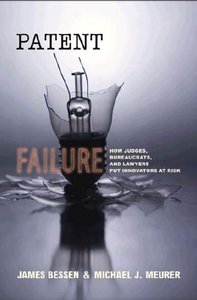
Patent Failure: How Judges, Bureaucrats, and Lawyers Put Innovators at Risk


Patent Failure: How Judges, Bureaucrats, and Lawyers Put Innovators at Risk Summary:
352 pages | Princeton University Press; illustrated edition edition (March 3, 2008) | 069113491X | PDF | 3 Mb


This is a pioneering and heroic effort to quantify the ways in which our patent system has failed to live up to its raison d'être: promoting innovation. The book will be controversial. But the authors make a forceful case that deserves to be heard.


Rabu, 28 Oktober 2009

Ethics in Practice: Lawyers' Roles, Responsibilities, and Regulation


Ethics in Practice: Lawyers' Roles, Responsibilities, and Regulation Summary:
Publisher: Oxford University Press, USA | ISBN: 019512961X | edition 2000 | PDF | 320 pages | 1.1 mb


Lawyers' ethics have been condemned for centuries, but they received little scholarly scrutiny until the last few decades. Ethics in Practice brings together leading experts in the emerging field of legal ethics to discuss the central dilemmas of practicing law.
This collection cuts across conventional disciplinary boundaries to address the roles, responsibilities, and regulation of contemporary lawyers. Contributors address common concerns from diverse perspectives, including philosophy, psychology, economics, political science, and organizational behavior. Topics include the nature of professions, the structure of practice, the constraints of an adversarial system, the attorney-client relationship, the practical value of moral theory, the role of race and gender, and the public service responsibilities of lawyers and law students. Unique in both its breadth and its depth, this book redefines debates that are of enduring significance for both the profession and the public.